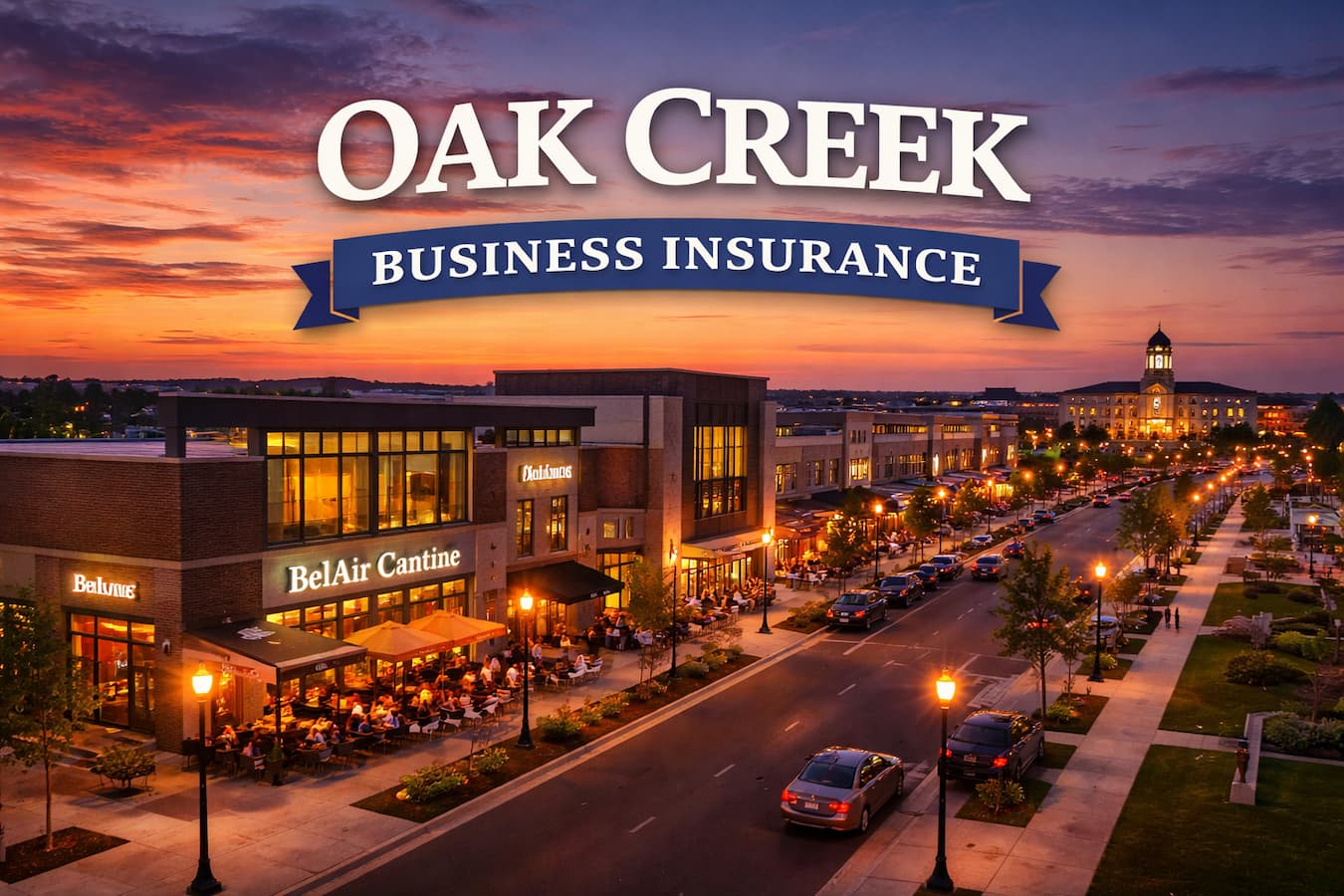
Drexel Town Square: mixed-use growth, restaurants and family traffic
Drexel Town Square gives Oak Creek a polished, visible center of gravity. Restaurants, cafés, retail concepts, wellness providers, salons, offices and service businesses in this area benefit from newer construction, stronger visibility and a built-in neighborhood flow. But the same things that make the area attractive also create pressure. Shared sidewalks, visible storefronts, parking areas, outdoor movement, lease obligations and customer-heavy traffic patterns all affect how the insurance conversation should be handled.
For many businesses here, a strong Business Owners Policy, general liability, commercial property and business income conversation is the right place to start. For restaurants, hospitality operations or businesses serving alcohol, the discussion often needs to go further.
Howell Avenue: auto-oriented, service-heavy and convenience-driven
Howell Avenue has a different feel. It carries more auto service energy, more high-visibility commercial traffic, and a stronger blend of convenience, service and destination-based business. Auto shops, restaurants, practical retail, small offices and service companies along this corridor often depend on speed, access and consistent movement. That means parking lots, entrances, customer turnover, vehicle-related exposure and equipment can all become more central to the policy structure.
Ryan Road and neighborhood commerce: local customers, daily use, repeat traffic
Ryan Road reflects another side of Oak Creek — neighborhood business, repeat local use, family-driven commerce and local service demand. These businesses may be less industrial and less event-oriented, but they are still deeply dependent on staying open, staying functional and protecting the physical location that customers recognize. When something interrupts that, the damage is often immediate.
I-94 corridor and Oakview Business Park: logistics, warehousing and property scale
Oak Creek’s I-94 corridor is one of the clearest reasons this city deserves its own page. Warehouses, distribution users, larger flex-space operations, commercial parks, fleet activity and industrial-adjacent businesses create a very different risk pattern than a retail center. Property values can be higher. Inventory and equipment matter more. Delivery and loading activity is constant. Employee injury exposure can be more significant. Vehicle and business income conversations become more central.
Businesses here often need a sharper look at commercial property, business income, workers compensation, commercial auto and umbrella, especially when operations depend on timing and uninterrupted flow.